

“Where’s my certificate?” “What’s the status of my claim?” “I didn’t get my receipt.”
If your team hears this every day, you’re already paying for a policyholder portal, in salaries, wasted time and frustrated clients. Self-service isn’t a marketing extra. It’s a productivity lever for brokers and insurers alike.
The hidden cost of phone-only service
Every “simple” call eats qualified time:
- Finding the policy in a folder or spreadsheet
- Sending a PDF via WhatsApp or email
- Callback when the client didn’t receive it
- No central trace when they call back a week later
Multiply by 20, 50 or 200 calls a week: the real cost never shows in a spreadsheet, but every week in your team’s workload, and everyone feels it.
What the portal handles (without you)
A web and mobile policyholder portal lets clients:
- View policies and renewal dates
- Download certificates and documents
- Report a claim and attach photos
- Track claim progress
- See payment history
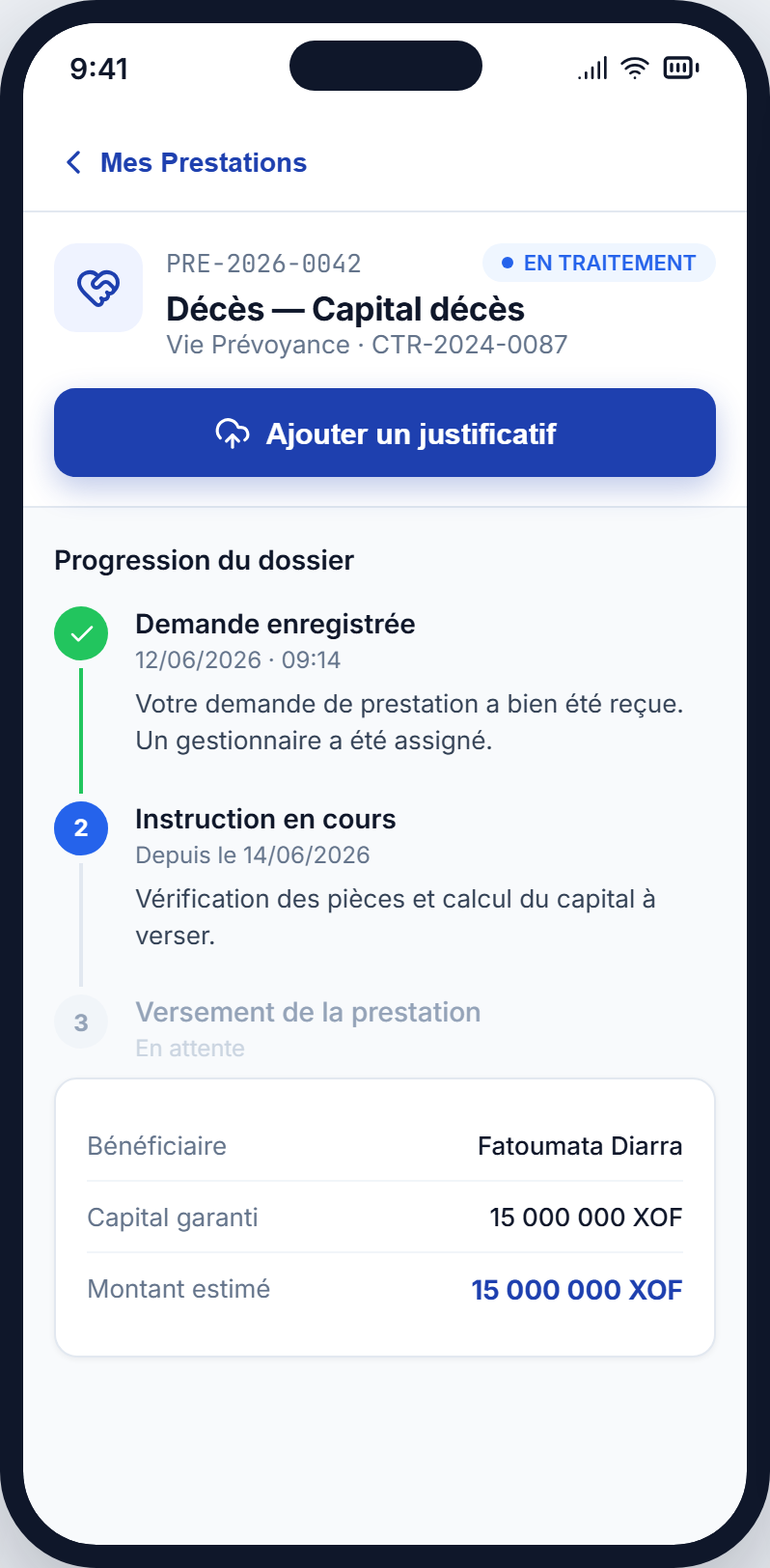
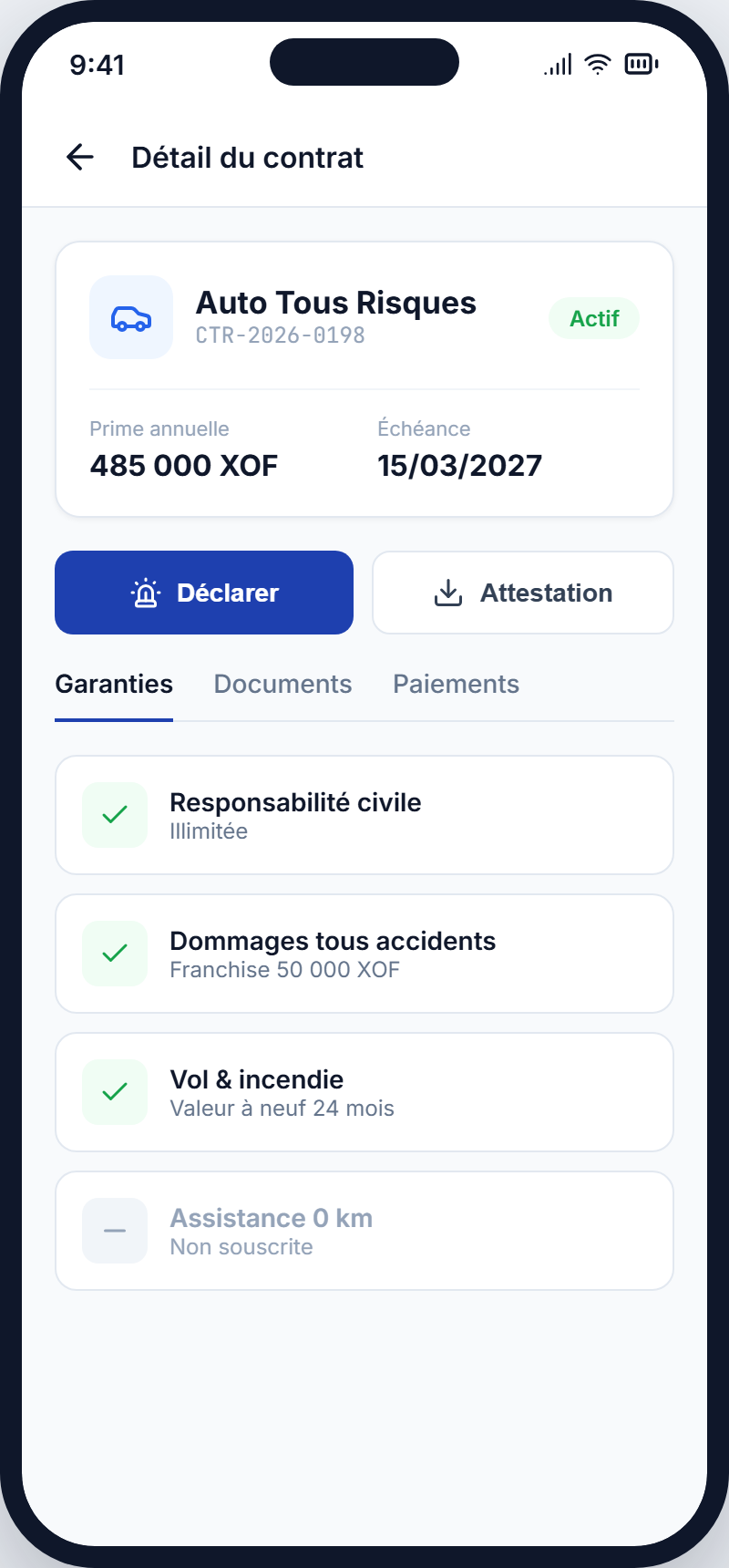
Request #1: a document. Available 24/7, including Sunday evening.
Claims journeys, real-time tracking and mobile access complete the picture. The priority is deflecting repeat requests before they hit your line.
Estimating ROI (simple method)
Take a typical week:
- Count “admin” calls/messages (documents, claim or benefit status, policy info).
- Assume 5–10 minutes per request (conservative).
- Multiply by your loaded hourly cost, not headline salary alone.
Loaded hourly cost = (monthly pay + employer charges + share of rent, telecom, supervision) ÷ hours actually spent on these requests. In Central and West Africa, 3,000–8,000 XOF/h is a common range for front-office / back-office roles (~$5–13/h at prevailing rates). Recalculate with your own payroll, city and seniority.
Small operation (broker or microinsurer, a few people fielding calls), assumptions: 40 requests × 7 min × 5,000 XOF/h ≈ 25,000 XOF / week, or ~1.3M XOF / year (roughly $2,200 / year).
Large operation (insurer or network with a call centre), assumptions: 280 requests × 8 min × 7,500 XOF/h ≈ 280,000 XOF / week, or ~14M XOF / year (roughly $24,000 / year).
These figures are worked examples, not a salary survey. What matters is plugging in your volume and your loaded rate. The cost is often understated because it’s spread across several people.
A portal won’t remove 100% of calls (complex claims, complaints). But 40–60% fewer repeat requests is realistic once adoption kicks in.
Adoption: the real challenge
The best portal is useless if nobody knows it exists. Three levers that work:
- Policy onboarding: SMS or email with portal link at bind
- QR code on paper certificates
- Trained staff: when someone calls for a document, systematically point them to the portal
Built-in FAQ also cuts load: recurring questions answered once.
What MovAssur delivers here
White-label policyholder portal (web + mobile), connected to the same data as production and claims. No double entry: what the policyholder sees is what your team manages. For insurers, the portal is part of the digital layer to connect to your core.
Learn more: client portal page.
What next?
A portal can go live in a few weeks on a narrow scope (one product, one country), without waiting for every legacy policy to be migrated first.
Want to estimate ROI on your call volume? Request a demo: we’ll show the policyholder portal in a real setup.