

A motor claim doesn’t stop at the accident report: it carries on with the garage doing the repair, the assessor evaluating the damage, and sometimes the clinic following an injured policyholder.
In most systems, these service providers stay completely outside the claims tool: they receive a file by phone or email, send their report back the same way, and the file’s real status gets pieced together by hand across several teams.
What it costs to leave a provider outside the system
This way of working has a cost that never shows up on an insurer’s dashboard, but weighs on every file:
-
A claims handler calling a garage to check on a repair
-
An assessment report received by email, re-keyed by hand into the file
-
A WhatsApp thread or inbox that becomes the only record if a delay or amount is disputed
-
A policyholder calling back because nobody can tell them where their file stands, even though the provider already knows
A disagreement over what was agreed with a provider often comes down to fragile evidence: an informal exchange, hard to find and hard to rely on weeks later.
Direct access, scoped to the file
Giving a partner garage, assessor or clinic direct access, scoped to the one file that concerns them, changes the nature of the exchange. In practice:
- The provider receives the file directly in the system, no manual handoff
- They update their own intervention status (in progress, done, waiting on a part)
- They upload a quote or assessment report straight into the file, with no email for someone else to re-key
- Every action is timestamped and attributed to its author, on that specific file
The claims handler keeps control of validation and the final decision. The provider’s access stays scoped to their own piece of the work, never to the full portfolio.

The provider appears by name on the authorization, with a status tracked in real time.
And for the policyholder?
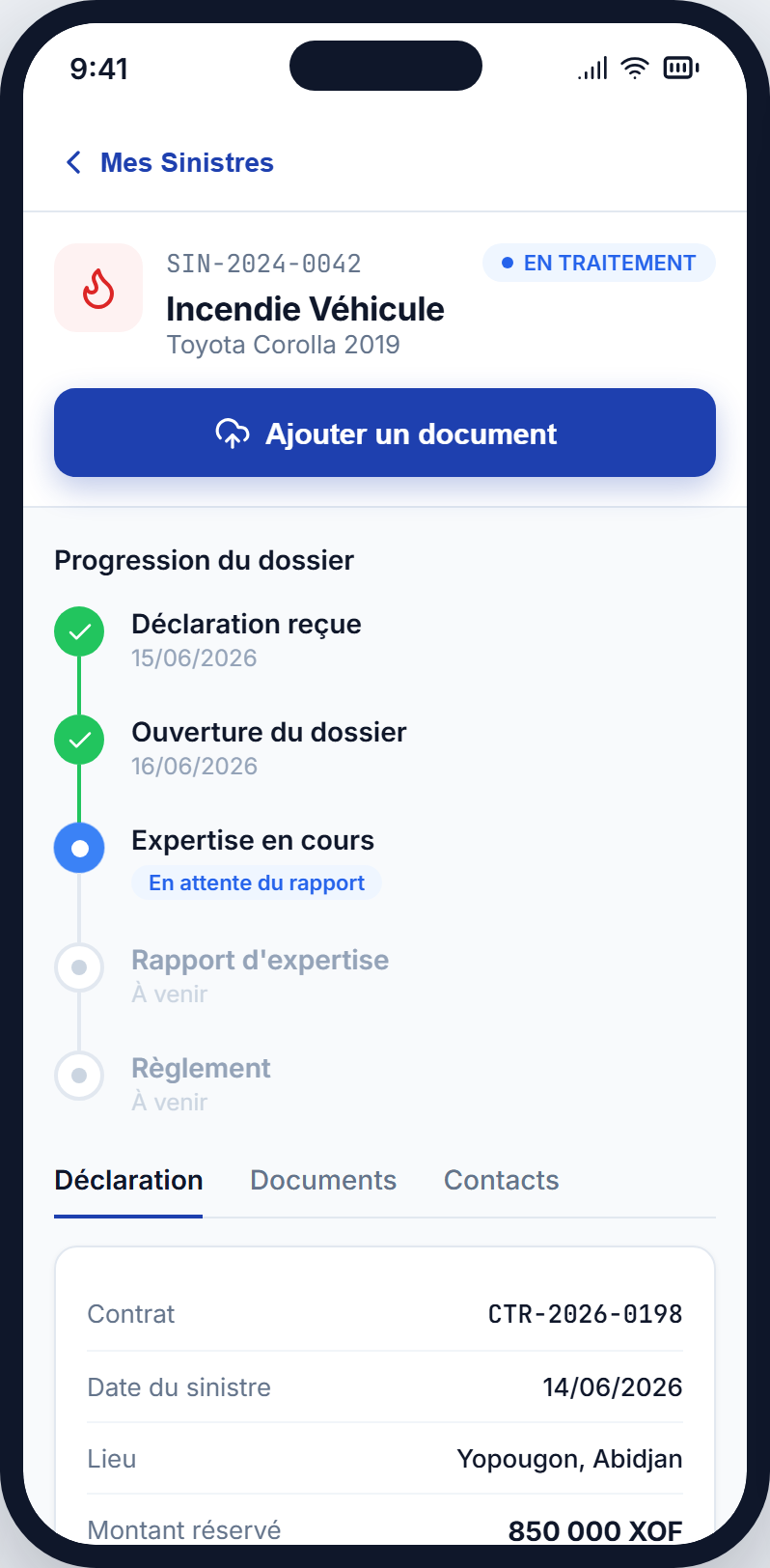
A policyholder tracking their claim through the portal sees information that’s actually current, because it comes directly from the provider rather than a summary pieced together after the fact. Fewer calls to check on a file, more confidence in the tracking.
What MovAssur delivers here
MovAssur’s claims module lets you open provider access (garage, assessor, clinic) tied directly to a file, with intake in the system, status updates from the provider and document and report uploads with no re-keying on the insurer’s side.
This access runs on the same reporting and tracking journey already available to the policyholder, on the same database. No separate tool to reconcile afterwards. For broader context on the insurer side, see our article on the digital layer and the core.
What next?
Bringing providers on board is usually rolled out product by product (motor first in most cases), with partners already in place, without renegotiating existing agreements to start digitizing the exchange.
Want to see how a provider network fits into your claims chain? Request a demo: a walkthrough of the journey on your own case.