
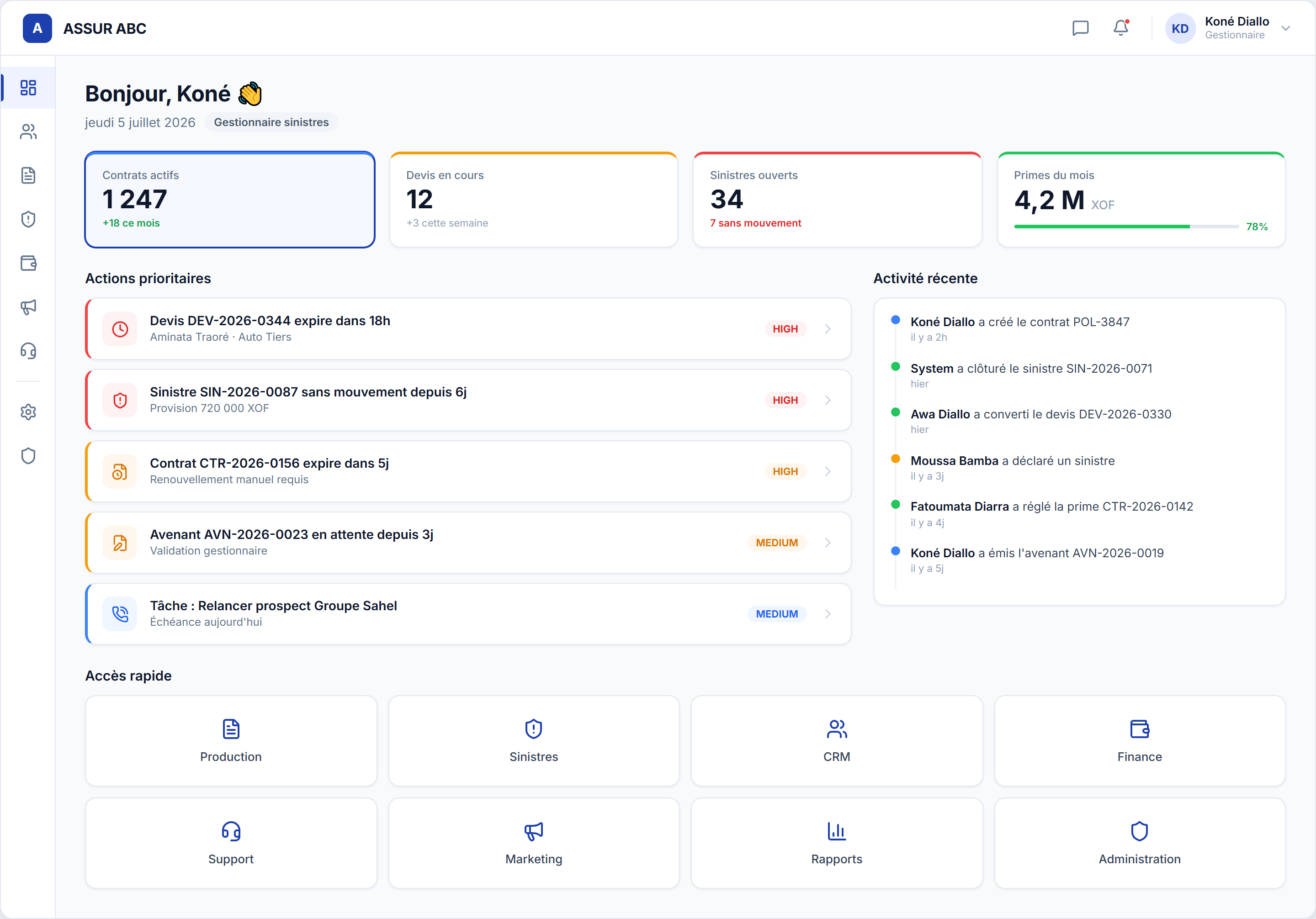
Modernising insurance doesn’t always mean replacing a policy admin system that still does its job. Many insurers we talk to already run a core — sometimes ageing, sometimes solid — but lack a unified digital layer: no single policyholder portal, brokers re-keying data, claims tracked outside the system.
The right question isn’t “should we replace everything?” It’s: what must stay in the core, and what should become self-service?
The insurance core: what you can’t afford to hack
The core covers what legally and financially binds the insurer: products, pricing, underwriting, policy management, claims, reserves, regulatory reporting.
When that foundation is sound, the challenge isn’t duplicating it in another spreadsheet. It’s stopping workarounds — email, manually signed PDFs, claims tracking in parallel tools.
Warning signs on the core side
- Two teams maintain different rate grids.
- A claim “exists” in an inbox but not in the system.
- Leadership only trusts a monthly export, not the live tool.
The digital layer: where policyholders and the network meet you
The digital layer is everything that connects the core to the field: policyholder portal, broker workspace, online claims intake, payments, documents, notifications.
Without it, every interaction goes through a call, a branch counter or WhatsApp. The core can be perfect; the customer experience stays slow.
Distribution: the link that’s often missed
Insurers don’t always sell direct. Brokers, agents, micro-networks need production tools (quotes, binding) and oversight (portfolio, commissions) without full admin access to the core.

The digital layer must serve the field, not only head office.
We support an insurer in Cameroon on this model: digital CRM and distribution connected to the business. The pattern repeats: the network scales faster than manual processes allow.
Claims: the integration stress test
If a claim starts on paper, gets re-keyed, then is chased by phone, there is no digital layer — whatever the marketing site says.
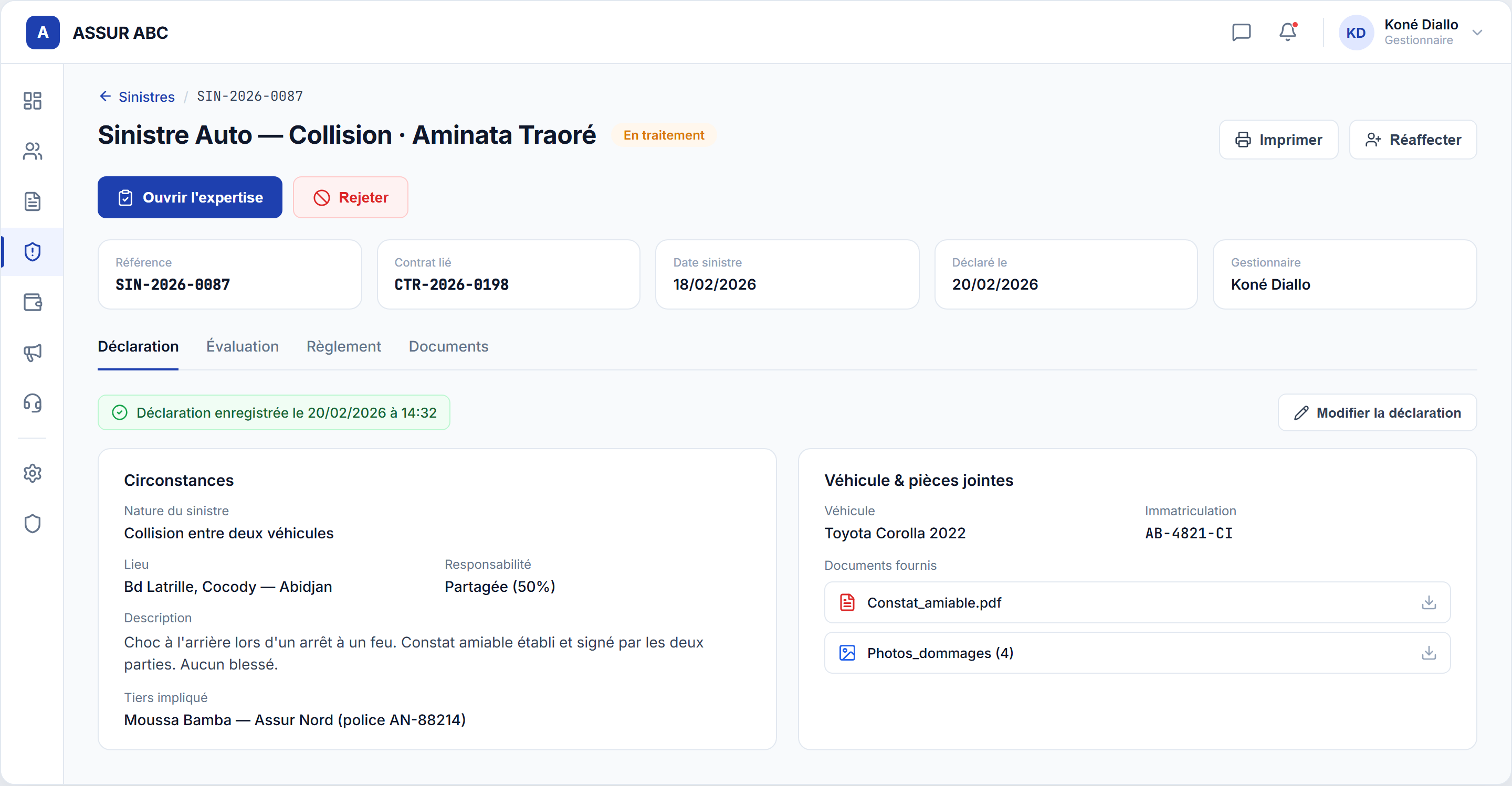
A claim filed online or by the network creates a structured file — not another email.
Assessment and settlement follow the same thread. Less re-keying, fewer disputes about “who said what”.
Three decision scenarios
1. Solid core, weak digital
Priority: policyholder portal + network tools. Keep the core; MovAssur carries the digital experience and connects to existing flows per scope.
2. Tired core, no digital
Priority: integrated platform — products, production, claims, portal — without a three-year “big bang”. Roll out by line of business (motor first, health next, etc.).
3. Microinsurance or greenfield
Priority: all-in-one from day one, mobile-first and low-connectivity aware. That’s the pattern for a full deployment we’re involved with in the DRC.
What changes for leadership
- Product time-to-market: a new rate grid doesn’t take six weeks to cross the organisation.
- Cost to serve: fewer calls for questions a portal can answer.
- Usable data: production and claims in one reference, not five exports.
What next?
Migration doesn’t start with a 200-page specification. It starts with a clear scope: one product, one channel, one claims journey — then expand.
Insurer looking to map core vs digital for your context? Request a demo — we walk through the product on a real case, no commitment.